The Missing Step in Yacht Repairs: How Follow-Through Keeps Your Vessel on Schedule
Yacht owners rarely lose time because a mechanic turns a wrench too slowly. Delays usually come from something much simpler: unclear expectations, limited visibility, and no defined moment when the job is truly “done.”
When a repair lingers for weeks longer than expected, one missing follow-through step usually stands out:
- No firm milestones
- No structured vendor check-ins with photos
- No acceptance checklist at completion
At Reliant Yacht Management, we see this pattern regularly across Port Canaveral, Cape Coral, and the broader Space Coast and Southwest Florida. The good news: putting a few disciplined processes in place can transform repair coordination, refit oversight, and ongoing vessel management.
Below is how we approach it—and how you can apply the same thinking to your own yacht.
Why Yacht Repairs Linger in the First Place
Whether your vessel is in Cocoa Beach, Merritt Island, Fort Myers, or Punta Gorda, the root causes of delay tend to look similar:
- Vague scope: “Fix the generator” instead of a documented description of symptoms, tests, and target condition.
- Open-ended timelines: “We’ll get to it next week” with no milestones or check‑in dates.
- Limited visibility: No photos, work notes, or confirmation of what’s actually been done aboard.
- No acceptance standard: The owner assumes the job is complete; the vendor assumes follow-up will happen later.
Preventive yacht maintenance and reactive repairs both require the same discipline: clear expectations, consistent oversight, and a defined endpoint.
Step 1: Set Firm Milestones Before Work Begins
Firm milestones are often the single step that would have prevented a lingering repair.
Instead of a single completion date, break the work into stages:
-
Assessment & quote
- Deadline for on-board inspection
- Date for written estimate and scope
-
Parts & scheduling
- Confirmation that parts are ordered and ETA
- Scheduled start date for work aboard
-
Execution milestones
- “Old components removed” by a specific date
- “New system installed and wired” by a specific date
- “Dockside testing complete” with sea trial (if required) by a specific date
-
Final sign-off
- Date for owner/manager review and acceptance
This structure is essential for larger items such as refit oversight, generator rebuilds, electronics upgrades, or stabilizer repairs—especially when the owner is out of state.
Milestones don’t guarantee that everything goes perfectly. They do ensure that slippage is caught early, while it’s still manageable.
Step 2: Use Vendor Check-Ins With Photos, Not Just Verbal Updates
For many absentee yacht owners in Brevard County, Cape Coral, and Naples, the biggest frustration is simple: “I don’t know what’s actually happening on my boat.”
Vendor check-ins with photos turn vague reassurance into verifiable progress:
-
Work-in-progress photos
Cables labeled before removal, old parts off the vessel, new components mounted, access panels properly reinstalled. -
Condition confirmation
Bilge areas after work, cleanup of debris, hose runs, clamps, and wiring all visible. -
Testing documentation
Screenshots of fault codes cleared, engine data during sea trial, breaker positions, or thermal images where appropriate.
Reliant’s Vessel Intelligence platform is built around this idea. Every visit and vendor update can be documented with:
- Time-stamped photos
- Written notes
- Status of maintenance items and recommendations
Artificial intelligence helps organize and compare this information over time—flagging recurring issues or patterns—but experienced captains and marine professionals remain responsible for evaluating what it means and what happens next.
When structured check-ins are part of the process, owners have professional care aboard and complete visibility ashore, without chasing text messages or piecing together scattered emails.
Step 3: Close Every Job With an Acceptance Checklist
Many lingering repairs are not actually incomplete—they’re just not fully validated. An acceptance checklist provides a defined, objective finish line.
A well-designed checklist for yacht repair coordination might include:
-
Work scope match
- Was every item on the original scope addressed?
- Are any recommendations clearly listed separately?
-
Operational checks
- Does the equipment start, stop, and operate through its full range?
- Have both dockside and sea trial conditions been tested if appropriate?
-
Safety and workmanship
- Are wiring, hoses, and mounts properly secured and supported?
- Are panels, floorboards, and lockers restored to proper condition?
-
Documentation
- Are serial numbers, firmware versions, and part numbers recorded?
- Are invoices and warranties attached to the vessel record?
-
Owner-facing summary
- What was found, what was done, and what should be watched going forward?
At Reliant, this acceptance step is documented in Vessel Intelligence, so there is a clear service history for future reference, survey-item follow-up, resale, or insurance questions.
How This Process Supports Absentee Owners and New Yacht Owners
For out-of-state owners or new yacht owners managing a vessel from afar, these follow-through steps are essential.
They support:
-
Monthly yacht inspections and vessel readiness
Routine checks catch emerging issues before they become urgent, and every finding is documented. -
Preventive yacht maintenance planning
AI-assisted tracking helps organize service intervals and recurring tasks, while our team coordinates qualified vendors. -
Storm preparation and post-storm inspections
Specific checklists, before-and-after photos, and clear documentation of any damage or concerns. -
Captain services and vessel relocation
A captain’s on-the-water feedback is integrated into the same record as mechanical and cosmetic findings. -
Survey-item coordination after purchase
Items called out during a survey are tracked as discrete projects, each with scope, milestones, photos, and acceptance criteria.
The result is not just fewer delays—it’s a calmer, more predictable ownership experience.
Which Follow-Through Step Matters Most?
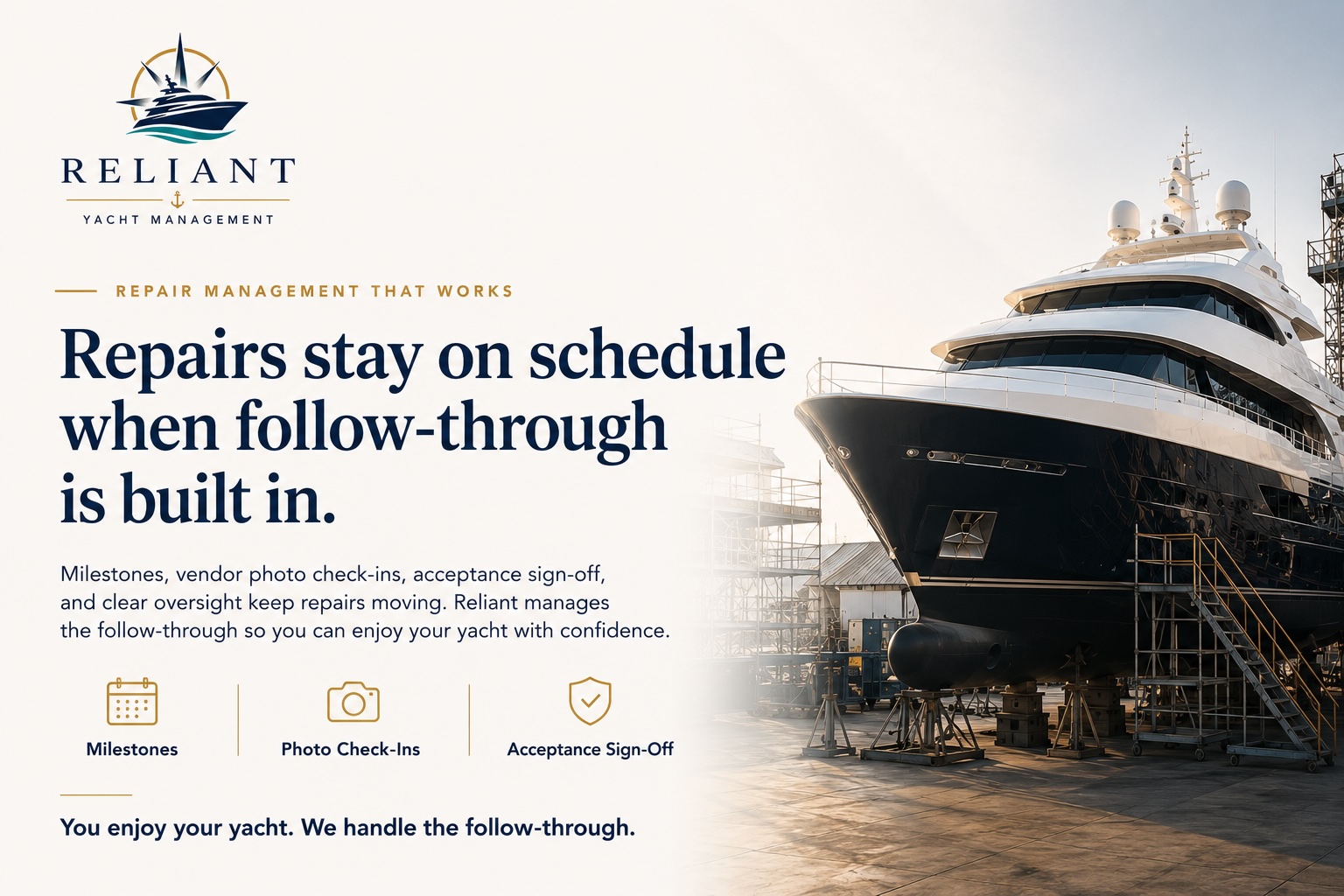
Firm milestones, vendor check-ins with photos, and acceptance checklists all work together. When a repair has dragged on, one of these is almost always missing.
- Milestones create accountability.
- Check-ins with photos provide visibility.
- Acceptance checklists define completion.
When combined within a thoughtful yacht management framework, they give owners confidence that every inspection is documented, every issue tracked, and every project followed through.
If you own a vessel near Port Canaveral, Cape Coral, or anywhere along Florida’s Space Coast or Southwest Gulf Coast and want more disciplined follow-through on repairs and maintenance, Reliant Yacht Management can help.
Contact us to discuss a yacht management plan built around professional care aboard and complete visibility ashore.