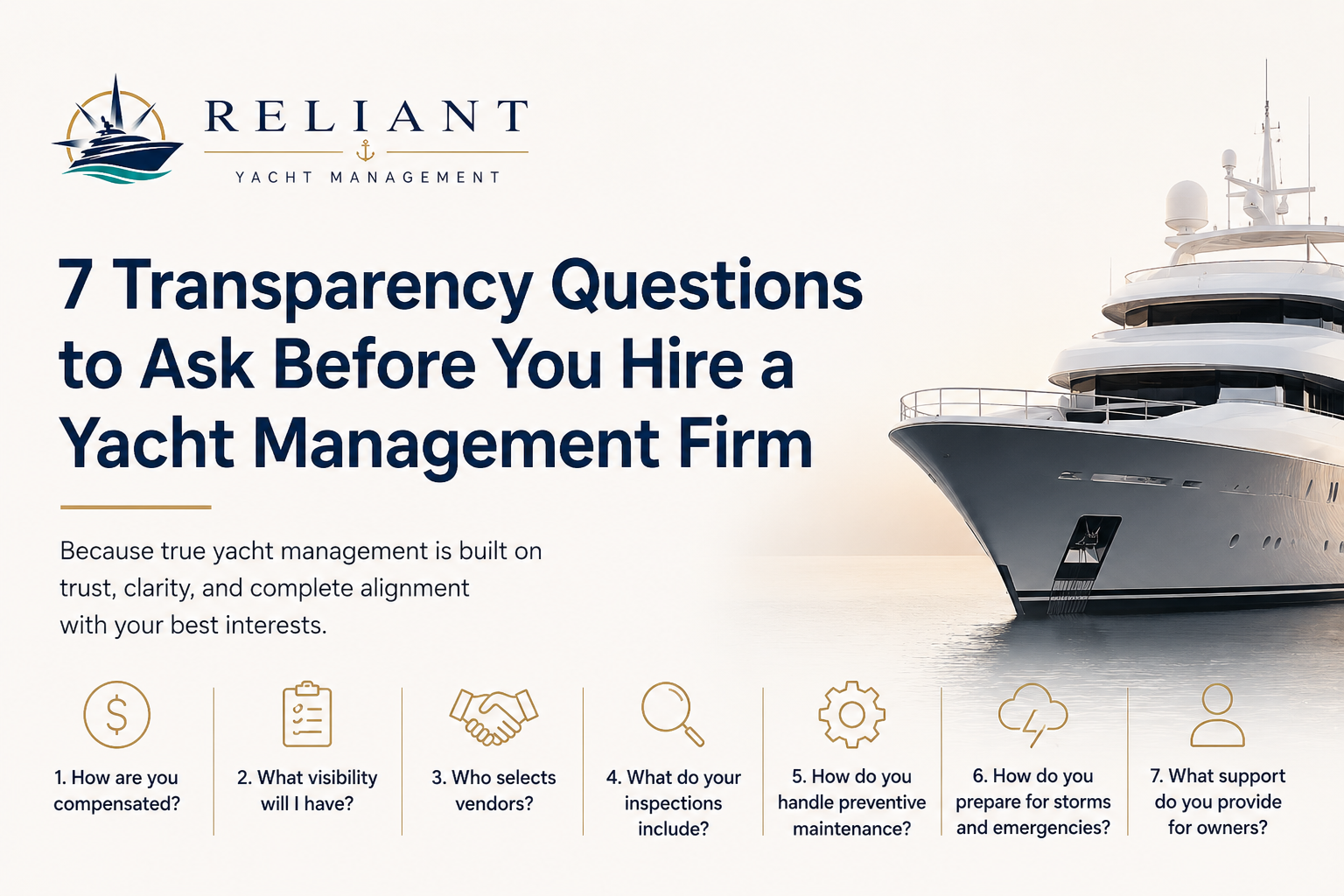
Before You Hire a Yacht Management Firm, Ask These 7 Transparency Questions
Choosing a yacht management partner is as much about trust as it is about technical skill. Whether you keep your vessel in Port Canaveral, Cape Coral, or anywhere along Florida’s Space Coast and Southwest Florida, you’re putting a valuable asset in someone else’s hands.
To confirm you’re getting true owner-first representation—not just another repair coordinator with hidden incentives—ask these five transparency questions before you sign any agreement.
1. How Are You Compensated, and Do You Add Markups to Vendor Invoices?
This is the single most important transparency question.
A professional yacht management firm should clearly explain:
- How their management fee is structured
- Whether they add a percentage markup to vendor quotes or invoices
- How they handle trade discounts or commissions offered by yards and contractors
Hidden markups on parts and labor can quietly inflate your costs and create a conflict of interest. If your vessel manager earns more when you spend more, it can be difficult to know whether a recommendation is truly in your best interest.
An owner-first yacht management company will:
- Disclose all fees in writing
- Avoid undisclosed vendor markups
- Provide copies of original vendor quotes and invoices
- Explain any administrative or coordination charges upfront
At Reliant Yacht Management, vendor recommendations are based on what’s best for the vessel and owner, not on margin opportunities. That alignment is the foundation for long-term trust.
2. What Kind of Visibility Will I Have Into Inspections, Maintenance, and Projects?
Transparency is not just about money—it’s about information.
Before engaging a yacht management firm, ask:
- How will I see the results of monthly yacht inspections?
- Will I receive photos, videos, and written notes after each visit?
- Can I review a complete history of maintenance, repairs, and refits?
- Is there a centralized platform, or will everything come through scattered emails and texts?
For absentee yacht owners—especially those living out of state—having structured, accessible documentation is essential. You should be able to log in or open a report and immediately understand:
- Current vessel condition
- Open concerns or developing issues
- What work is scheduled or in progress
- What has been completed and verified
Reliant’s Vessel Intelligence platform is built specifically to deliver this level of clarity. Every inspection, photo, recommendation, and completed task is documented, so you’re never guessing about what’s happening aboard.
3. Who Selects Vendors, and How Do You Evaluate Their Work?
Yacht management is only as good as the professionals it coordinates—mechanics, shipyards, electricians, detailers, and more.
Ask prospective firms:
- Do you have preferred vendors? If so, why?
- Do you receive compensation, rebates, or incentives from those vendors?
- How do you verify that repair and refit work is completed correctly?
- Will you be on site during critical phases of a project?
You’re looking for a firm that:
- Acts as your representative, not the yard’s
- Uses experienced eyes to confirm work is done as quoted
- Documents before-and-after conditions
- Flags concerns early instead of simply passing along invoices
In Port Canaveral, Cocoa Beach, Cape Coral, Fort Myers, and surrounding areas, there are many capable marine professionals—but they still need oversight. An accountable yacht manager stands between your checkbook and the work being performed, ensuring you get what you’re paying for.
4. What Do Your Routine Yacht Inspections Actually Include?
“Monthly yacht inspections” can mean anything from a quick dock walk to a methodical, structured vessel check.
Clarify:
- What specific systems are checked each visit? (bilges, batteries, lines, shore power, HVAC, electronics, etc.)
- Are sea trials or systems run periodically, or is it purely visual?
- How are findings prioritized and tracked over time?
- How are safety, security, and storm readiness included?
Effective vessel management in Brevard County or Southwest Florida isn’t occasional dockside glances—it’s proactive attention. A strong program will:
- Identify issues while they’re minor (drips, corrosion, signs of water intrusion)
- Track recurring concerns and patterns
- Integrate inspection findings into preventive yacht maintenance planning
Reliant’s approach is grounded in consistent, documented checks that feed a living record of your yacht’s condition.
5. How Do You Handle Preventive Maintenance vs. Reactive Repairs?
Preventive yacht maintenance reduces surprise failures and protects long-term value, but it must be balanced with realistic budgets and usage.
Ask:
- Do you maintain a written maintenance plan tailored to my vessel and use profile?
- How do you track service intervals for engines, generators, drives, and critical systems?
- How do you prioritize what needs to happen now, soon, or later?
- Will you coordinate survey-item follow-up or pre-listing readiness if I plan to sell?
You want a firm that:
- Uses both manufacturer guidance and real-world experience
- Plans ahead for haul-outs, yard time, and seasonal work
- Provides clear recommendations with costs and timing, not vague “you should” notes
Technology, including AI tools, can help organize maintenance data and highlight trends, but experienced marine professionals must interpret that information. At Reliant, technology supports decision-making; it never replaces captains, surveyors, or technicians.
6. How Do You Prepare and Advocate for My Vessel During Storms or Emergencies?
Florida’s Space Coast and Southwest Florida demand serious attention to storm preparation and recovery.
Before you commit, ask:
- What is your written storm preparation plan for vessels under management?
- What specific actions are taken as a storm approaches (lines, fenders, chafe gear, canvas, equipment)?
- How are preparations documented?
- What is your role after a storm in assessing condition and coordinating any necessary repairs?
While no company can guarantee a vessel will avoid damage, a disciplined approach to storm readiness can reduce risk and support faster recovery.
For absentee yacht owners, this is especially important. You should know:
- Who will be physically present to prepare your yacht
- How you’ll be updated before and after the event
- How any required repair coordination and insurance documentation will be handled
7. What Support Do You Provide for New or Absentee Yacht Owners?
First-time and out-of-state owners often need more than basic oversight. They need guidance and a reliable point of contact.
Ask:
- Do you offer new yacht owner support, including orientation and best practices?
- Can you provide captain services for training, trips, or vessel relocation?
- How do you help absentee owners make decisions when they can’t be present?
- Will you assist with survey follow-up items when purchasing or selling?
A true yacht management partner will:
- Be accessible and responsive
- Translate technical findings into plain language
- Present options with clear pros, cons, and costs
- Coordinate logistics so your yacht is ready when you are
For owners keeping vessels in Merritt Island, Melbourne, Punta Gorda, Naples, and nearby waters, this level of support can be the difference between a stressful experience and a rewarding ownership journey.
Choosing a Yacht Manager Who Works for You—Not Your Vendors
When you ask these seven transparency questions, you quickly see which yacht management firms are built on accountability and which are primarily coordination middlemen.
Look for:
- Clear, written fee structures with no hidden markups
- Documented monthly yacht inspections and project oversight
- Vendor management that prioritizes your interests
- Thoughtful preventive maintenance planning
- Serious, documented storm preparation
- Strong support for new and absentee owners
- Technology that enhances visibility, not complexity
Reliant Yacht Management serves yacht owners within approximately 100 miles of Port Canaveral and Cape Coral with one core commitment:
Professional care aboard. Complete visibility ashore. Every inspection documented, every issue tracked, and every project followed through.
To discuss a tailored yacht management program for your vessel, contact Reliant Yacht Management today.