Why Your Yacht’s Preventive Maintenance Plan Should Start With What’s Actually On Board
Many yacht owners assume a “standard” maintenance checklist is enough. Oil changes, bottom cleaning, a yearly haul-out, a quick look at the batteries, and they feel covered.
The reality is very different.
Every yacht is a unique combination of engines, generators, electronics, pumps, hydraulics, safety systems, and comfort equipment—each with its own manufacturer requirements. A generic checklist will inevitably miss critical items, duplicate others, and leave you exposed to unnecessary risk, unexpected downtime, and preventable expense.
A truly effective preventive maintenance plan is built from one place only: the specific equipment actually installed aboard your vessel.
At Reliant Yacht Management, this is where every management relationship begins.
The Problem With “Generic” Yacht Maintenance
Whether you’re a first-time owner or a seasoned cruiser, it’s easy to fall into one of these traps:
- Relying on yard recommendations that are based on “what we usually do”
- Following a checklist from a previous boat that isn’t configured like your current yacht
- Assuming your captain or a single vendor is tracking all manufacturer requirements
- Ignoring little discrepancies between different manuals “because it’s probably close enough”
These shortcuts create real-world issues:
- Unnecessary work and expense – Systems get over-serviced while hidden components are never touched.
- Increased downtime – A neglected pump, hose, or fitting fails right before a trip, stranding you at the dock.
- Warranty and insurance gaps – Manufacturers and insurers expect documented compliance with OEM intervals, not “we thought we were close.”
- Fragmented records – Invoices, texts, and emails tell part of the story, but no one can see the full maintenance picture.
Preventive maintenance only protects your time and investment when it matches the real equipment aboard and is consistently documented.
Step One: Identify the Equipment Actually Installed
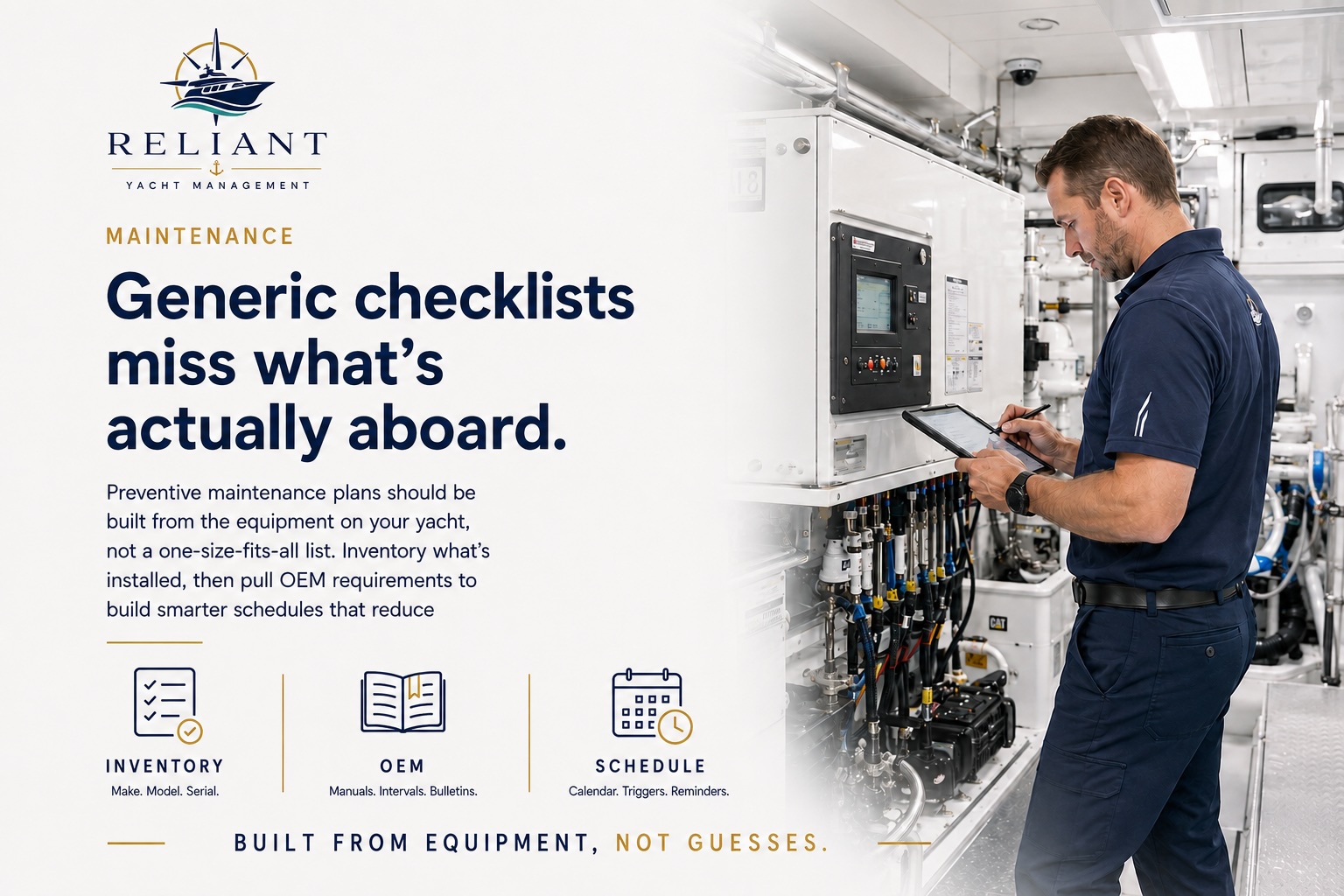
The foundation of a reliable preventive maintenance plan is a clear inventory of what’s on the vessel today—not what was on the original build sheet, not what was on a survey five years ago.
A professional yacht management process typically includes:
-
System-by-system walkthroughs
Engines, generators, fuel, water, electrical, HVAC, hydraulics, electronics, safety gear, tenders, and toys are all cataloged. -
Capturing model and serial numbers
For each piece of equipment, we record:- Manufacturer
- Exact model
- Serial number
- Location on the vessel
- Date installed (when known)
-
Noting modifications and upgrades
Replaced pumps, upgraded electronics, added inverters, or non-OEM parts all influence maintenance requirements. -
Cross-checking against prior records
Survey findings, build documents, and invoices are compared to what’s actually aboard now to catch discrepancies.
For absentee owners and seasonal residents on Florida’s Space Coast and in Southwest Florida, this alone is eye-opening. Many discover onboard systems they didn’t realize existed—or didn’t know required regular attention.
Step Two: Extract the OEM Requirements That Actually Matter
Once your onboard equipment is identified, the next step is to understand exactly what each manufacturer expects.
That means:
-
Retrieving the correct manuals
Not just a generic brand guide, but the precise documentation for your model, year, and configuration. -
Extracting maintenance requirements such as:
- Service intervals (hours, months, or usage-based)
- Fluid and filter specifications
- Inspection points and torque values
- Recommended replacement intervals for wear parts
- Special procedures for storage, layup, and heavy use
-
Reconciling conflicting information
Sometimes the engine manual, transmission manual, and boat-builder recommendations don’t perfectly align. This is where experience matters. A professional owner’s representative coordinates with captains, mechanics, and OEM guidance to develop a practical, conservative schedule.
At Reliant, we use smart tools and the Reliant Vessel Intelligence platform to streamline this work—organizing manuals, extracting maintenance tables, and structuring tasks by system. But the interpretation remains in the hands of experienced marine professionals.
Step Three: Build a Practical, Vessel-Specific Maintenance Schedule
With equipment identified and OEM requirements in hand, a preventive maintenance plan can be built around how you actually use your yacht.
A well-designed plan:
-
Groups tasks by system and interval
So oil changes, inspections, and adjustments can be combined efficiently rather than piecemeal. -
Reflects your real usage pattern
Seasonal Florida resident? Absentee owner visiting a few times a year? Full-time cruiser? Service intervals should adjust to your run time, storage habits, and environment. -
Accounts for environmental factors
Warm, salt-heavy Florida waters, marina vs. mooring, hurricane exposure, and shore power quality all influence what needs more frequent attention. -
Connects each task to a clear reason
Instead of “change filter every 200 hours,” you see:- What system it protects
- What failure it prevents
- How it supports warranty and insurance expectations
This is where many owners feel the difference between a generic list and a professionally built plan. You’re not just “doing maintenance”; you understand why each task matters.
How Smart Tools and AI Improve Organization—Not Decision-Making
Technology should make yacht management clearer, not more complicated.
Reliant’s Vessel Intelligence platform is being built to:
- Store the full equipment inventory with model and serial information
- Organize manufacturer manuals and maintenance schedules
- Track completed service, upcoming tasks, and aging components
- Maintain a visual history through regular, consistent photographs
Artificial intelligence supports this process by:
- Reading OEM manuals and extracting maintenance requirements
- Helping structure equipment-specific task lists and intervals
-
Comparing new photos to past images to flag visible changes
(corrosion, leaks, staining, wear, or movement)
AI helps keep information organized and brings potential concerns to the surface. It does not replace the judgment of captains, mechanics, surveyors, and experienced marine professionals, who remain responsible for evaluating findings and making final decisions.
The Real Benefits to Owners: Fewer Surprises, Lower Stress
When your preventive maintenance plan is built from the actual equipment aboard and grounded in OEM requirements, several things happen:
- Fewer urgent repairs – Small issues are caught during inspections and addressed on your schedule, not on a holiday weekend.
- Less downtime – Critical systems are serviced before peak-use periods, increasing the odds your yacht is ready when you are.
- Better cost control – You avoid both premature “just in case” work and expensive failures caused by overlooked maintenance.
- Stronger warranty and insurance position – Documented compliance with manufacturer recommendations and survey follow-up is easy to demonstrate.
- Clear visibility from anywhere – You know what was done, why it was done, and what comes next—whether you’re in town or across the country.
For many Reliant clients, the greatest value is intangible: stepping aboard with confidence, knowing someone has been looking after the yacht as carefully as they would themselves.
Professional Care Aboard. Complete Visibility Ashore.
If you own a yacht on Florida’s Space Coast or in Southwest Florida and are relying on guesswork, scattered records, or generic checklists, this is the right moment to put your vessel on a smarter footing.
Reliant Yacht Management can inventory your actual equipment, align your maintenance plan with OEM requirements, organize your documentation, and provide the ongoing oversight that keeps your yacht ready, reliable, and well protected.
To schedule a conversation about building a vessel-specific preventive maintenance plan for your yacht, contact Reliant Yacht Management today.